<?xml version="1.0" encoding="utf-8"?><feed xmlns="http://www.w3.org/2005/Atom" ><generator uri="https://jekyllrb.com/" version="3.9.5">Jekyll</generator><link href="https://edmorgan.info/feed.xml" rel="self" type="application/atom+xml" /><link href="https://edmorgan.info/" rel="alternate" type="text/html" /><updated>2024-05-09T11:19:41+00:00</updated><id>https://edmorgan.info/feed.xml</id><title type="html">Ed Morgan.</title><subtitle>GTM Technical Lead @ Rubrik, I like the Cloud, automation, and picking heavy things up then putting them down again.</subtitle><entry><title type="html">#Blogtober Pt 2 - vSphere and Infrastructure as Code</title><link href="https://edmorgan.info/Blogtober-2/" rel="alternate" type="text/html" title="#Blogtober Pt 2 - vSphere and Infrastructure as Code" /><published>2017-10-21T12:00:00+00:00</published><updated>2017-10-21T12:00:00+00:00</updated><id>https://edmorgan.info/Blogtober-2</id><content type="html" xml:base="https://edmorgan.info/Blogtober-2/"><![CDATA[<blockquote>
  <p>This post was previously hosted on a different site and then migrated here.</p>
</blockquote>

<h3 id="part-2---provisioning-vsphere-vms-with-terraform">Part 2 - Provisioning vSphere VMs with Terraform</h3>

<p>In the first part of this blog series we looked at what Infrastructure as Code is, and some of the kinds of software we can use to orchestrate and manage our datacentres. In this part we’re going to run through the basics of creating virtual machines in vSphere with Terraform.</p>

<p>There’s two main files we’re predominently interested at this point to allow us to interact with vSphere. First we have our variables file: 
<script src="https://gist.github.com/mo6020/99c4553ddf413383b702fc0d6be7e4b2.js"></script></p>

<p>In here you would typically set the values that could be re-used across different Terraform builds, for example in the above example we’re defining a default VM template, a default network, and our vSphere credentials, etc.</p>

<p>It’s important to notice that we’ve obfuscated things like credentials into a secondary file called terraform.tfvars, these can then be excluded from your source control platform in .gitignore (assuming you’re using Git).</p>

<p>Now that we’ve defined our variables we can get into the meat of the configuration.</p>

<p>Here’s the core terraform config file <em>infrastructure.tf</em>:
<script src="https://gist.github.com/mo6020/854f13f052fc6c5993503d0a2946f8d0.js"></script></p>

<p>The first code block here is where we tell Terraform what Provider we’re using, in our case vSphere, and the appropriate options for the Provider. In this example we’re also telling Terraform to accept unverified SSL certs to get around any self-signed certificate errors in vSphere.</p>

<p>After we define our Provider we can get into the business of defining resources. In our example we’re defining two seperate VMs, but they’re pretty much the same at this point.  In the resource block we define characteristics such as hostname, number of vCPUs, memory, etc, and then define network and disk information.</p>

<p>In my lab the VMs all pick up a DHCP address automatically, but you can easily define further network settings like so:</p>

<p><img src="https://blog.edmorgan.info/assets/images/tf-network-settings.png" alt="Network settings" /></p>

<p>So now we have the basics of two VMs ready to be automagically built within your vSphere environment by Terraform, how do we run this?</p>

<p>First it’s important to remember that Terraform will parse all the files in the working directory, so you should break out your apps or configurations into specific folders. This being a test Terraform config for a 2-tier web app, mine looks like this:</p>

<p><img src="https://blog.edmorgan.info/assets/images/tree.png" alt="I AM GROOT" /></p>

<p>First we have to run <code class="language-plaintext highlighter-rouge">terraform init</code> to install the vSphere Provider (this only has to be done once), and then we can run <code class="language-plaintext highlighter-rouge">terraform plan</code> to dry-run the proposed build steps. In our case we should see a result that looks like this: 
<code class="language-plaintext highlighter-rouge">Plan: 2 to add, 0 to change, 0 to destroy.</code></p>

<p>All being well we can now run <code class="language-plaintext highlighter-rouge">terraform apply</code>. At this point you can sit back and wait, and watch the magic happen in vSphere:</p>

<p><img src="https://blog.edmorgan.info/assets/images/vmbuild.png" alt="Build" /></p>

<p>If we check back to our CLI, Terraform will also confirm that it has finished, and our VMs are provisioned with the settings we specified and ready to go:</p>

<p><img src="https://blog.edmorgan.info/assets/images/tf-finished.png" alt="Done" /></p>

<p>There we go, and if we look in vSphere we’ll see them up and online, huzzah!</p>

<p><img src="https://blog.edmorgan.info/assets/images/vms-built.png" alt="Done" /></p>

<p>In part 3 we will now look at how to use an additional Provisioner to install and manage the software configuration of these VMs.</p>]]></content><author><name>edmorgan</name></author><category term="blog" /><category term="vmware" /><category term="automation" /><category term="terraform" /><category term="blogtober" /><summary type="html"><![CDATA[This post was previously hosted on a different site and then migrated here.]]></summary><media:thumbnail xmlns:media="http://search.yahoo.com/mrss/" url="https://edmorgan.info/assets/images/markdown.jpg" /><media:content medium="image" url="https://edmorgan.info/assets/images/markdown.jpg" xmlns:media="http://search.yahoo.com/mrss/" /></entry><entry><title type="html">#Blogtober - vSphere and Infrastructure as Code</title><link href="https://edmorgan.info/Blogtober-1/" rel="alternate" type="text/html" title="#Blogtober - vSphere and Infrastructure as Code" /><published>2017-10-15T12:00:00+00:00</published><updated>2017-10-15T12:00:00+00:00</updated><id>https://edmorgan.info/Blogtober-1</id><content type="html" xml:base="https://edmorgan.info/Blogtober-1/"><![CDATA[<blockquote>
  <p>This post was previously hosted on a different site and then migrated here.</p>
</blockquote>

<p><img src="https://blog.edmorgan.info/assets/images/vsphere-iac.png" alt="IAC" /></p>
<h3 id="part-1---what-is-infrastructure-as-code">Part 1 - What is “Infrastructure as Code”?</h3>
<p>Infrastructure as Code, or programmable infrastructure (my preferred term), is the practice of managing and defining the configurations, and automating the deployment, of infrastructure components. There are several benefits to using this kind of methodology, not least bringing things like version control, automated testing and staging, and predictable delivery to infrastructure deployments.</p>

<p>There are typically two kinds of software used to manage programmable infrastructure - Orchestrators, and Configuration Management tools.</p>

<p><strong>Orchestrators</strong>: Orchestrators typically use codified infrastructure files to provision and build servers, or datacentre objects, automatically, based upon the values specified in their configuration files. Popular examples of this kind of software include <a href="https://terraform.io">Terraform</a>, and AWS Cloudformation.</p>

<p><strong>Config Management tools</strong>: Configuration management tools, such as <a href="https://chef.io">Chef</a>, <a href="https://puppet.com">Puppet</a>, and <a href="https://ansible.com">Ansible</a>, take this a step further. They are predominently designed to install and manage software on existing servers. Again, this is an excellent method to ensure consistent deployment of applications, and to mitigate things such as configuration drift across servers through their lifecycle.</p>

<p>Over the course of <em>#blogtober</em>, which clearly I’m starting late, I’ll show a series of posts around manipulating vSphere with both an Orchestrator, and then how to use a Config Management tool to install and manage applications within VMs.</p>

<p><img src="https://blog.edmorgan.info/assets/images/terraform-chef.png" alt="IAC" /></p>

<p>I’m going to be using Terraform and Chef for the purposes of this series, and although I am familiar with Terraform, I will be learning Chef as we go, which is always fun. So go easy on me…</p>

<p>At a high level, Terraform uses a series of components to interact with your environment (or a public cloud platform). These include:</p>

<p><strong>Providers</strong>: Terraform supports multiple providers, be they Public Cloud platforms like AWS or Azure, Docker, OpenStack, or as we’re going to see here vSphere. I have heard exciting rumours about a Nutanix provider about to drop, too. A full list can be found <a href="https://github.com/terraform-providers">on GitHub</a>…</p>

<p><strong>Resources</strong>: Resources is where you define your components, be that a server, a VM, or whatever.</p>

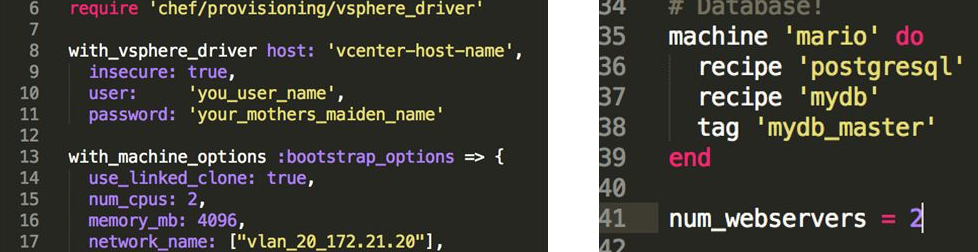
<p><strong>Provisioners</strong>: Provisioners is where you can call an additional 3rd party config management tool, in our case Chef, or execute scripts to bootstrap or manage the resource Terraform has just created.</p>

<p>To close of this first <em>#blogtober</em> post all we need to do is install Terraform.</p>

<p>Because Terraform is written in Go, it’s a piece of cake to install regardless of your platform. I’m using a Mac, so all I need to do is to pull it down from Homebrew with the following command:</p>

<p><code class="language-plaintext highlighter-rouge">brew install terraform</code></p>

<p>If you’re using Windows or Linux you should just be able to download the Terraform binary and place it into a location in your $path.</p>

<p>Simples.</p>

<p>In the next post we’ll look at how to provision vSphere VMs using the Terraform vSphere provider.</p>]]></content><author><name>edmorgan</name></author><category term="blog" /><category term="vmware" /><category term="automation" /><category term="terraform" /><category term="blogtober" /><summary type="html"><![CDATA[This post was previously hosted on a different site and then migrated here.]]></summary><media:thumbnail xmlns:media="http://search.yahoo.com/mrss/" url="https://edmorgan.info/assets/images/markdown.jpg" /><media:content medium="image" url="https://edmorgan.info/assets/images/markdown.jpg" xmlns:media="http://search.yahoo.com/mrss/" /></entry><entry><title type="html">Rubrik Alta 4.1 Announced. Maximum Microsoft!</title><link href="https://edmorgan.info/Rubrik-41/" rel="alternate" type="text/html" title="Rubrik Alta 4.1 Announced. Maximum Microsoft!" /><published>2017-09-27T12:00:00+00:00</published><updated>2017-09-27T12:00:00+00:00</updated><id>https://edmorgan.info/Rubrik-41</id><content type="html" xml:base="https://edmorgan.info/Rubrik-41/"><![CDATA[<blockquote>
  <p>This post was previously hosted on a different site and then migrated here.</p>
</blockquote>

<h3 id="manage-your-microsoft-stack-on-one-platform-from-on-premises-azurestack-to-azure-cloud-native-workloads">Manage your Microsoft stack on one platform. From on-premises AzureStack to Azure Cloud Native workloads.</h3>
<p><img src="https://blog.edmorgan.info/assets/images/rubrik_ms_dino.gif" alt="RAWR!" /></p>

<p>This afternoon we at Rubrik announced version 4.1 of our Cloud Data Management platform, following on from the 4.0 Alta release 3 months ago.  For those of you that missed the 4.0 announcements there’s a series of on-demand webinars available on the <a href="https://pages.rubrik.com/AltaRelease_Series.html">Rubrik website</a>. I kept meaning to write a series of features on the main integrations, particularly around Nutanix AHV, but actual work got in the way unfortunately.</p>

<p>So what’s new in the 4.1 release? Let’s get the big ones out of the way first…</p>

<p>Expanded Microsoft ecosystem support to manage the complete stack end to end. New features include:</p>

<p><strong>Azure CloudOn</strong>:</p>

<p>Want to take your vSphere or Hyper-V virtual machine then convert it on the fly and instantiate it into Azure, just like we can do with you VMware VMs in AWS? Well now you can. Boom.</p>

<p>Obviously there’s some compelling use cases around test/dev, cloud migration, and DR into Azure with this functionality, but also there’s a nice story about decoupling VMs and applications from the infrastructure they run on. That’s my favourite bit.</p>

<p>How does this work, you say?</p>

<p><img src="https://blog.edmorgan.info/assets/images/gandalf_rubrik.jpg" alt="MAGIC!" /></p>

<p>Not really. Actually what we do is take the snapshot we already have of the VM, create the virtual disk, create the page blob, and then launch the VM. As with in AWS, we read the VM information from the config file (VMX or VMCX) and suggest the appropriate instance size, query the Azure DC for the appropriate network settings, and then populate these into the CloudOn GUI.</p>

<p><img src="https://blog.edmorgan.info/assets/images/cloudon.png" alt="CloudOn" /></p>

<p>Your Azure VM will then be available for whatever purpose you require with minimal interaction from you.</p>

<p><strong>AzureStack Support</strong>:</p>

<p>Hot off the back of Azure CloudOn, we’ve also announced support for AzureStack to enable Rubrik customers to manage their Microsoft workloads whereever they run, as part of a unified data management fabric.</p>

<p><img src="https://blog.edmorgan.info/assets/images/rubrik-azurestack.png" alt="AzureStack" /></p>

<p>Obviously Rubrik is an API first company, so we fully expose our REST API to enable you to fully orchestrate any data management activities, be that Live Mounting of SQL databases for test and dev, Cloud instantiation of workloads, or periodic application and validation of SLA policies.</p>

<p><strong>Multi-Tenancy</strong>:</p>

<p>This is a big one. Although it has always been possible to create a multi-tenant experience via customer GUI interfaces based upon the API, we now have multi-tenancy baked into the Rubrik UI natively. This has been a big ask for both service providers, and large enterprises and integrates with RBAC to provide true management multi-tenancy to different BUs or customers within an organisation.</p>

<p>Within multi-tenancy we have the concept of Roles, and Organisations.</p>

<p>Roles are a new permissions hierachy like so:</p>

<p><img src="https://blog.edmorgan.info/assets/images/multitenant-roles.png" alt="Roles" /></p>

<p>Organisations partition the objects managed by the Rubrik cluster into departmental or customer units, like so:</p>

<p><img src="https://blog.edmorgan.info/assets/images/multitenant-orgs.png" alt="Orgs" /></p>

<p><strong>GCP Support</strong>:</p>

<p>Added CloudOut (archival) support for Google Nearline, Coldline, multi-regional, and regional.</p>

<p><strong>AWS Glacier Support</strong>:</p>

<p>Glacier support to enable Vault policies on WORM locked archives for compliance and legal requirements.</p>

<p><strong>SQL AAG Enhangements</strong>:</p>

<p>Enhanced support for Always-On Availability Groups. Rubrik now backs DBs up based upon the AAG’s preferences, and fully supports both  manual and automatic failover events.</p>

<p><strong>VLAN Tagging</strong>:</p>

<p>New support for 802.1q VLAN tagging to logically isolate network traffic as it converges on the Rubrik cluster.</p>

<p><strong>Archive Cascading</strong>:</p>

<p>This allows for data replicated to a secondary Rubrik cluster to be tiered off from that cluster, rather than always having to archive from the source Rubrik cluster.</p>

<p><img src="https://blog.edmorgan.info/assets/images/cascading-archive.png" alt="Cascade all the things" /></p>

<p>I’m a fan of this, it reminds me of my younger days dealing with cascading SnapMirror/Vault relationships in NetApp land… good times…</p>

<p><strong>Other updates</strong>:</p>

<p>There’s a bunch of other minor updates that I won’t detail here, including reporting enhancements, SCVMM integration, AWS C2S Support, and VM linking (to enhance vCenter migration and DR testing). Keep your eyes on the Twitters for new webinars to get the full detail, or reach out to me directly via <a href="https://twitter.com/mo6020">@mo6020</a>.</p>]]></content><author><name>edmorgan</name></author><category term="blog" /><category term="rubrik" /><category term="cloud" /><category term="Microsoft" /><summary type="html"><![CDATA[Rubrik 4.1 product announcement]]></summary><media:thumbnail xmlns:media="http://search.yahoo.com/mrss/" url="https://edmorgan.info/assets/images/markdown.jpg" /><media:content medium="image" url="https://edmorgan.info/assets/images/markdown.jpg" xmlns:media="http://search.yahoo.com/mrss/" /></entry><entry><title type="html">Did someone say MOAR CLOUD? Rubrik 3.2 just dropped.</title><link href="https://edmorgan.info/Rubrik_MOARCLOUD/" rel="alternate" type="text/html" title="Did someone say MOAR CLOUD? Rubrik 3.2 just dropped." /><published>2017-04-25T12:00:00+00:00</published><updated>2017-04-25T12:00:00+00:00</updated><id>https://edmorgan.info/Rubrik_MOARCLOUD</id><content type="html" xml:base="https://edmorgan.info/Rubrik_MOARCLOUD/"><![CDATA[<blockquote>
  <p>This post was previously hosted on a different site and then migrated here.</p>
</blockquote>

<h3 id="otherwise-known-as-the">Otherwise known as the…</h3>
<p><img src="https://blog.edmorgan.info/assets/images/moarcloud.png" alt="MOAR CLOUD!" />
I’m going to start off by saying this: Wow, this is a pretty big payload for a .x iteration, who says new features only come out in major releases eh?</p>

<p>So what do we get in v3.2?</p>

<p>Two major new features:</p>

<ul>
  <li><strong>Cloud Cluster</strong> - 4 node (minimum) Rubrik CDM instances running natively in AWS or Azure</li>
  <li><strong>Native NAS support</strong> - no need for anymore proxy VMs</li>
</ul>

<p>And a boatload of enhancements to existing functionality:</p>

<ul>
  <li>Enhancements to the Edge virtual appliance for MSPs</li>
  <li>Replication engine enhancements (distinct retention for local and replication clusters, and multi-replication targets)</li>
  <li>On-demand snapshot SLA assignment</li>
  <li>Encryption key management (KMIP)</li>
  <li>Additional SQL Server enhancements (Renaming files on export, and creation of missing directories)</li>
  <li>API enhancements</li>
  <li>Pure FlashBlade support, and additional API integration to the FlashArray series</li>
</ul>

<p>So lets take a look at Rubrik Cloud Cluster. Before we go into the nuts and bolts, lets take a step back and look at how most companies start a cloud strategy, and the steps they take before they get to the glorious multi-cloud utopia that we all aspire to…</p>

<p><img src="https://blog.edmorgan.info/assets/images/cloudjourney.png" alt="To the cloud..." />
This is not a new picture, but that doesn’t reduce it’s validity. Most of the companies I go to see are somewhere around Phase 1, some are at Phase 2 (even if it’s only test/dev and O365), and a tiny percentage are at Phase 3. Rubrik are aligning the product roadmap and feature releases to correspond with this graph. The smart amongst you will notice that today’s announcements for Cloud Cluster place us somewhere within Phase 2, and you could deduce from this that there’s more good stuff coming in future releases. <strong>You would be right.</strong></p>

<p>Oh, and if anyone’s interested in seeing our roadmap going forwards, <a href="https://www.youtube.com/watch?v=dQw4w9WgXcQ">here’s a little teaser for you</a>… How’d you like the look of that?</p>

<p>Now that’s out of the way, let’s talk about Cloud Cluster.</p>

<h4 id="rubrik-cloud-cluster">Rubrik Cloud Cluster</h4>
<p><img src="https://blog.edmorgan.info/assets/images/cloudcluster.png" alt="Rubrik Cloud Cluster" /></p>

<p>So what is Rubrik Cloud Cluster? It’s exactly the same as your Rubrik appliance on-premises, just off-prem in AWS or Azure. The only difference being you need to have a minimum of 4 nodes to enable Erasure Coding. The cluster can then scale out on a node-by-node basis from this 4 node minimum, and will give you a single unified fabric between multiple clouds and your on-premises datacentre. Also baked in is all the SLA based goodness, and advanced reporting that comes as standard with any Rubrik appliance.</p>

<p>From a sizing perspective, this is what it looks like: 
<img src="https://blog.edmorgan.info/assets/images/cloudcluster-sizing.png" alt="Rubrik Cloud Cluster Sizing" />
Currently supported for backup in v1 are Windows Filesets, Linux Filesets, and SQL Databases, but this opens up plenty of possibilities around not just data protection, but also data mobility:</p>

<p>Want to replicate data between public cloud providers? <strong>Yep, we can do that.</strong> <br />
Want to backup your cloud applications back to a central on-prem location? <strong>No dramas.</strong> <br />
Want to restore files or data from Azure to AWS, or to your on-premises data center? <strong>Cool, man.</strong> <em>(hint - nice migration path between cloud providers here)</em> <br />
Want to archive off cloud data to blob storage for compliance purposes? <strong>Go for your life.</strong></p>

<p>Now, knowing what’s on our roadmap for upcoming releases, I’m very excited indeed to see how this product continues to grow over the next few months. As always, if you would like more information don’t hesitate to reach out to me on <a href="https://twitter.com/mo6020">Twitter</a> or register for the <a href="https://t.co/OXVMjfH7ac">webinar around Cloud Cluster</a> on the 11th of May.</p>]]></content><author><name>edmorgan</name></author><category term="blog" /><category term="rubrik" /><category term="cloud" /><summary type="html"><![CDATA[Rubrik 3.2 product announcement]]></summary><media:thumbnail xmlns:media="http://search.yahoo.com/mrss/" url="https://edmorgan.info/assets/images/markdown.jpg" /><media:content medium="image" url="https://edmorgan.info/assets/images/markdown.jpg" xmlns:media="http://search.yahoo.com/mrss/" /></entry><entry><title type="html">Pure Storage and Rubrik announce FlashBlade support and joint solution.</title><link href="https://edmorgan.info/Rubrik_Pure_PowerUp/" rel="alternate" type="text/html" title="Pure Storage and Rubrik announce FlashBlade support and joint solution." /><published>2017-04-24T12:00:00+00:00</published><updated>2017-04-24T12:00:00+00:00</updated><id>https://edmorgan.info/Rubrik_Pure_PowerUp</id><content type="html" xml:base="https://edmorgan.info/Rubrik_Pure_PowerUp/"><![CDATA[<blockquote>
  <p>This post was previously hosted on a different site and then migrated here.</p>
</blockquote>

<h3 id="power-up-your-dc-with-a-next-generation-flash-happy-meal">Power up your DC with a next generation flash “happy meal”!</h3>
<p><img src="https://blog.edmorgan.info/assets/images/pure-rubrik.png" alt="Pure Rubrik" />
<em>The Happy Meal analogy is <a href="https://www.forbes.com/sites/justinwarren/2017/04/21/rubrik-partners-with-pure-storage-for-flashy-blade-backups/#4ccb5ff232a9">Bipul’s</a>, not mine, I can’t claim credit for that one…</em></p>

<p>On Friday Rubrik made a couple of announcements around our partnership and integration with our friends over at <a href="https://www.purestorage.com">Pure Storage</a>; first up is support for Pure’s FlashBlade system.</p>

<p>FlashBlade is Pure’s scale-out NAS and Object Storage solution, so a different play to the FlashArray //M product that they made their name with, and their new //X array (the //M box on steroids, packed full of NVMe goodness), so I’m really happy that Rubrik can offer the same levels of SLA driven, API lead data protection to FlashBlade that we can deliver to the existing FlashArray portfolio.</p>

<p>The second announcement was around deeper integration into the //M series array, and a <a href="https://www.rubrik.com/wp-content/uploads/2017/04/Rubrik-and-Pure-Solution-Brief.pdf">joint solution</a> with Pure that will allow customers to achieve simplicity, performance, and integrated data management across hybrid and multi-cloud deployments.</p>

<p><img src="https://blog.edmorgan.info/assets/images/pure-rubrik-unified-small.png" alt="Pure Rubrik Unified Data Management" /></p>

<p>In the words of the boss-man, Bipul Sinha (Rubrik’s founder and CEO), <em>“We are pleased to lead the market with our data protection solution for FlashBlade. Finally, customers can achieve unparalleled simplicity, performance and scalability across their environment with Pure and Rubrik. Our integration truly ties together Pure’s performance and manageability, to Rubrik’s cloud native data fabric, making data more agile across hybrid cloud environments.”</em></p>

<p>So how does this benefit customers? Typical deployments with both products tend to see the following:</p>

<ul>
  <li>Sub-1hr deployments - no more 30 page SOWs and lengthy professional service engagements</li>
  <li>Ultra-high performance - near zero latency and elimination of VM stun issues</li>
  <li>Unified management across a data fabric that spans both on-premises, and public cloud</li>
  <li>Seamless scalability</li>
  <li>Powerful on-board reporting capability via both Rubrik Envision and Pure1</li>
  <li>Typical reductions in datacentre footprint by up to 70%</li>
</ul>

<p>Rubrik’s level of integration within the solution is important because Pure’s snapshots are done at the volume level, which means that restores must be done at the volume level. This is something of a “<em>sledgehammer to crack a nut</em>” solution, but Rubrik’s integration into Pure’s snapshot engine API allows for granular restore of objects and files within each snapshot, making Pure’s array based snapshots far more powerful when combined with Rubrik.</p>

<p>So how does it work? It’s all in the APIs, baby.</p>

<p><img src="https://blog.edmorgan.info/assets/images/pure-rubrik-api.png" alt="Pure Rubrik API integration" /></p>

<p>If you’re interested in powering up your datacentre with an effect as dramatic as this small child ODing on sugar, make sure that you join our <a href="https://goo.gl/m7bJjj">joint webinar with Pure</a> on the May 5th, or reach out to me on <a href="https://twitter.com/mo6020">Twitter</a>.</p>

<p><img src="https://blog.edmorgan.info/assets/images/rubrik-pure-powerup.gif" alt="PowerUP!" /></p>

<p>Glorious.</p>]]></content><author><name>edmorgan</name></author><category term="blog" /><category term="rubrik" /><category term="storage" /><summary type="html"><![CDATA[Rubrik/Pure Storage announce joint solution]]></summary><media:thumbnail xmlns:media="http://search.yahoo.com/mrss/" url="https://edmorgan.info/assets/images/markdown.jpg" /><media:content medium="image" url="https://edmorgan.info/assets/images/markdown.jpg" xmlns:media="http://search.yahoo.com/mrss/" /></entry><entry><title type="html">Rubrik announces version 3.1. It’s a new feature bonanza.</title><link href="https://edmorgan.info/Rubrik_v31_FeatureBonanza/" rel="alternate" type="text/html" title="Rubrik announces version 3.1. It’s a new feature bonanza." /><published>2017-02-08T12:00:00+00:00</published><updated>2017-02-08T12:00:00+00:00</updated><id>https://edmorgan.info/Rubrik_v31_FeatureBonanza</id><content type="html" xml:base="https://edmorgan.info/Rubrik_v31_FeatureBonanza/"><![CDATA[<blockquote>
  <p>This post was previously hosted on a different site and then migrated here.</p>
</blockquote>

<p>As of 1pm GMT today, Rubrik announced version 3.1 of their codebase, bringing with it several new awesome features, and continuing their fast paced level of innovation and growth since they came out of stealth in 2015.</p>

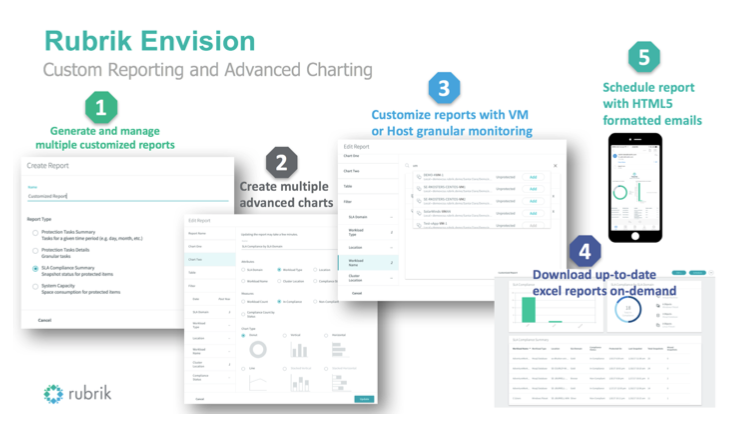
<p>First up on the new features is <strong>Rubrik Envision</strong>.</p>

<p><img src="https://blog.edmorgan.info/assets/images/rubrik-envision.png" alt="Rubrik Envision Image" /></p>

<p>Envision is an enhancement to the reporting functionality within Rubrik, allowing for custom reporting. A summary of functionality is detailed below:</p>

<ul>
  <li>Build your own reports</li>
  <li>Select from existing system built reports</li>
  <li>Customise report visualisation with advanced charts</li>
  <li>Select granular attributes and timelines</li>
  <li>Schedule report emails in either HTML5 or CSV format</li>
  <li>Generate on-demand Excel reports</li>
  <li>Create easily searchable galleries of reports</li>
</ul>

<p>This is all fine and dandy, but my favourite element is that the reports are designed to be useful to multiple roles within your organisatiion. Admins, Managers, and Auditors are all included, and multiple scenarios are supported out of the box, such as:</p>

<ul>
  <li>Daily Backup Administrator Report - daily report to see any protection task failures from the night before.</li>
  <li>Weekly Management Report - weekly summary report to highlight all data protection tasks within the last 7 days based on their SLA domain.</li>
  <li>Audit Report - ability for an auditor to pick a subset of clients at random and see detailed backup records within a specified time period.</li>
  <li>Remote Sites - regular report to monitor that remote sites are up-to-date in the case of a DR event.</li>
</ul>

<p><strong>Windows Server Protection</strong></p>

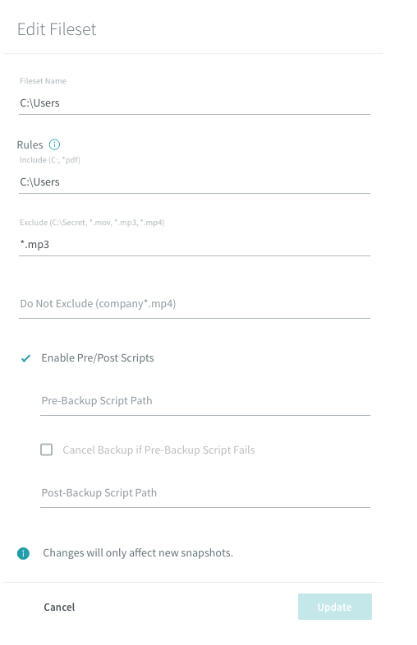
<p>In addition to the existing support for VMware VMs and Linux, support has been expanded to include Windows server. This supports granula file and folder backups within Windows via Filesets. Filesets are “a logical construct based on Includes and Excludes”, and can either follow a direct path to a file or folder, or be specifically configured to follow a UNC path.</p>

<p>For example, you might backup C:\Users on all Windows servers on a daily basis excluding .mp3 files. At the same time, you might backup other folders on the same servers on a weekly or hourly basis.</p>

<p><img src="https://blog.edmorgan.info/assets/images/rubrik-filesets.png" alt="Filesets" /></p>

<p>All Windows backups are indexed and searchable in the same way as VM and Linux backups.</p>

<p><strong>Software Encryption at Rest</strong></p>

<p><img src="https://blog.edmorgan.info/assets/images/rubrik-encrypt.jpg" alt="Encrypt all the things!" /></p>

<p>Although encryption at rest was already supported via Self Encrypting Drives, but as of v3.1 encryption at rest is now available via a Trusted Platform Module. This enables encryption to be available on a 1 brik cluster, as opposed to the previous 2 brik requirement for hardware encryption.</p>

<p>Encryption is focused on two components:</p>

<ol>
  <li>Rubrik’s Atlas file system which holds backup data and indices</li>
  <li>Metadata - internal database, logs, statistics, etc.</li>
</ol>

<p>Atlas is protected via AES-256 for all file writes. Specific encryption modes are used to match various data types - one method for short-term data such as initial ingest and another mode for long-term data. This additionally allows detection of tampering if backup data is modified even when the system is powered off.</p>

<p>Metadata is also protected via AES-256 level encryption and a method targeted to the metadata format.</p>

<p>The solution can “theoretically scale to 32 Exabytes within a single cluster”.</p>

<p><strong>Other Notable Additions</strong></p>

<p>If that wasn’t enough to get you going, here’s a few other additions squeezed into this release…</p>

<p><em>Linux and Windows UI Enhancements</em></p>

<p>UI has been made more “host centric”, with a dedicated page per host showing the filesets associated to that host.</p>

<p><em>SQL Server enhancements</em></p>

<p>Additional support for the following:</p>

<ul>
  <li>Support for SQL Server Failover Clusters - complete support for SQL Servers running on WSFC Clusters. The SQL agent must be on both nodes of a cluster. Failover clusters are then automatically recognized with a dedicated tab in the Rubrik interface for “Failover Clusters”. In the event of a failover, Rubrik automatically follows to the next SQL server and continues backing up without administrator intervention required.</li>
  <li>Advanced Export - given SQL Server’s capability for a database to have multiple data and log files, customers can now specify at an individual file level the restore location during an Export operation.</li>
  <li>Support for SQL Server 2016 - now fully supported.</li>
  <li>Enhanced Compression - Source Side Compression and Decompression</li>
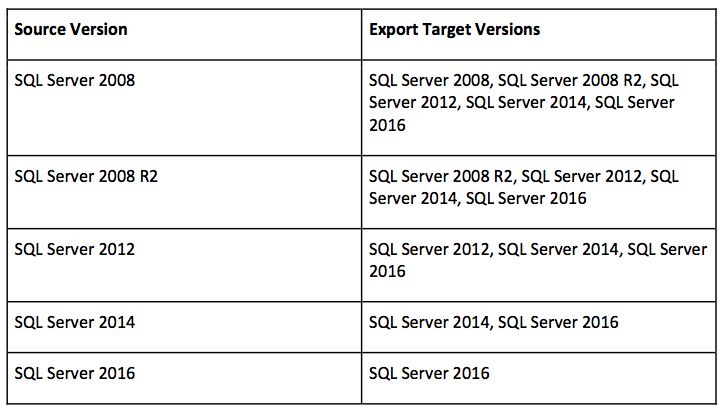
  <li>Cross Version Restore - supported for restore to the same or newer version as shown
below.</li>
</ul>

<p><img src="https://blog.edmorgan.info/assets/images/rubrik-sql.png" alt="SQL" /></p>

<p><em>Customer Driven Upgrades</em></p>

<p>New ability to do self service updates. Upload the package to the cluster and job done.</p>

<p><em>vCentre Enhancements</em></p>

<p>You can now manually refresh the vCentre, if you’re too impatient to wait for the timed refresh, and you can now restore VMs without vCentre, if required.</p>

<p>vSphere 6.5 is now officially supported, too.</p>

<p><em>Edge Improvements</em></p>

<p>You can now add capacity to a running Edge instance.</p>

<p><em>In-place file restore into a Linux VM</em></p>

<p>Restore a file or folder directly back to a
source VM with relevant permissions. The restore can overwrite existing files/folders or go to a separate folder on the source VM.</p>

<p>For a minor release (at least as far as version numbers go), that’s quite the list of features. I’m personally looking forward to getting some hands on and seeing what improvements have been made to the API under the hood.</p>]]></content><author><name>edmorgan</name></author><category term="blog" /><category term="rubrik" /><summary type="html"><![CDATA[Rubrik CDM 3.1 announcement]]></summary><media:thumbnail xmlns:media="http://search.yahoo.com/mrss/" url="https://edmorgan.info/assets/images/markdown.jpg" /><media:content medium="image" url="https://edmorgan.info/assets/images/markdown.jpg" xmlns:media="http://search.yahoo.com/mrss/" /></entry><entry><title type="html">Datacentre disruption, Rubrik style. Becoming #VendorScum.</title><link href="https://edmorgan.info/VendorScum-Rubrik/" rel="alternate" type="text/html" title="Datacentre disruption, Rubrik style. Becoming #VendorScum." /><published>2017-01-23T12:00:00+00:00</published><updated>2017-01-23T12:00:00+00:00</updated><id>https://edmorgan.info/VendorScum-Rubrik</id><content type="html" xml:base="https://edmorgan.info/VendorScum-Rubrik/"><![CDATA[<blockquote>
  <p>This post was previously hosted on a different site and then migrated here.</p>
</blockquote>

<p><img src="https://blog.edmorgan.info/assets/images/our-disaster-recovery-plan.png" alt="Backup sucks" /></p>

<p>Let me be frank with you, <strong>I hate backup</strong>. <strong>Backup freaking sucks</strong>.</p>

<p>In 15 years of working in IT backup platforms are invariably the most painful part of any project. This is normally either because a) it’s an <strong>afterthought</strong>, or b) whatever product the customer has chosen to go with is a <strong>legacy piece of crap</strong> that’s overly complex and hasn’t seen any real innovation for 20 years.</p>

<p>I’ve worked on projects that have had 6 week timescales solely to implement the backup environment, and they still haven’t worked correctly after that because someone undersized a media agent, or there weren’t enough proxy servers, or whatever.</p>

<p>Why do I mention this now? As of March 1st I shall be joining <a href="https://www.rubrik.com">Rubrik</a> as their 3rd SE in the UK, nominally covering Western EMEA.</p>

<p><img src="https://blog.edmorgan.info/assets/images/rubrik.png" alt="Rubrik" /></p>

<p>Rubrik appeals to me on many levels, but most importantly the way they’ve come to market with their product aligns 100% with how I feel backup should be. One of the analogies that I have used when talking to companies is this:</p>

<p><em>My house is more sophisticated from a backup and restore perspective than your datacentre. In this house I have 2 iPads, 2 iPhones, 4 Macs, all of which are backed up to both a NAS on premises, and offsite to the cloud. There’s no faffing around to configure anything, I manage it all from my iPhone, and I can restore to or from any device in seconds with minimal disruption.</em></p>

<p>This was the exact analogy that my new boss used to describe to me the simplicity of Rubrik’s approach, and at that point I was sold.  I was already a fan of Rubrik, but to have my own analogy quoted back to me by leadership within the company hammered home that I was joining the right team.</p>

<p><img src="https://blog.edmorgan.info/assets/images/mindblown.jpeg" alt="Mind blown" /></p>

<p>Of course Rubrik doesn’t just do backup. It comes in a lovely scale-out appliance model, with full native S3 interfaces, an API first approach to ensure full automation capabilities and interoperability to any other RESTful API, SLA and policy based management of all protected entities, local restore/clone, and the analytics and visibility into your data to allow you full control over it - regardless of where it sits.</p>

<p>Did I mention there’s a VSA for your ROBO/Edge deployments? There is.</p>

<p>This is a true Cloud Data Management platform to deliver data protection, search, analytics, compliance, and copy data management across private and public clouds.</p>

<p><img src="https://blog.edmorgan.info/assets/images/rubrik-cdm.png" alt="Mind blown" /></p>

<p>Suffice to say that I’m incredibly excited to begin this next chapter of my career, and incredibly excited to be joining Rubrik at a time where the whole datacentre is ripe for disruption.</p>

<p>I’ll leave you with a video covering off the product, and hopefully you’ll see why I’m so excited. If you would like more information reach out to me, or take a look at the <a href="https://techfieldday.com/companies/rubrik/">series of videos from Tech Field Day</a>.</p>

<p><strong>Don’t backup, go forwards</strong>.</p>

<iframe width="560" height="315" src="https://www.youtube.com/embed/H5OmbAFWmVo" frameborder="0" allowfullscreen=""></iframe>]]></content><author><name>edmorgan</name></author><category term="blog" /><category term="career" /><category term="rubrik" /><summary type="html"><![CDATA[Moving to vendor land]]></summary><media:thumbnail xmlns:media="http://search.yahoo.com/mrss/" url="https://edmorgan.info/assets/images/markdown.jpg" /><media:content medium="image" url="https://edmorgan.info/assets/images/markdown.jpg" xmlns:media="http://search.yahoo.com/mrss/" /></entry><entry><title type="html">Avere Systems - is it a cache, is it a tier, does it even matter?</title><link href="https://edmorgan.info/SFD11-Avere/" rel="alternate" type="text/html" title="Avere Systems - is it a cache, is it a tier, does it even matter?" /><published>2016-11-14T12:00:00+00:00</published><updated>2016-11-14T12:00:00+00:00</updated><id>https://edmorgan.info/SFD11-Avere</id><content type="html" xml:base="https://edmorgan.info/SFD11-Avere/"><![CDATA[<blockquote>
  <p>This post was previously hosted on a different site and then migrated here.</p>
</blockquote>

<p>Very early into Avere’s presentation, after Avere referring to themselves as a ‘tiered file system’, the question was posed to them whether they really were providing tiering, or whether it was just a caching mechanism.</p>

<p>Now, I’m not going to go into this in depth, because a) <a href="https://twitter.com/chris_m_evans">Chris Evans</a> has done that already <a href="https://blog.architecting.it/2016/10/11/cache-or-tier-does-it-matter/">here</a>, and b) I don’t really think it matters that much, so let’s get into what they actually do…</p>

<p>Before Avere’s presentation, I was relatively unaware of their products, and it turns out that they provide a performance enhancing, appliance based overlay to multiple storage backends, be that public cloud object storage, legacy NAS arrays, or an On-Prem object store.</p>

<p><img src="https://blog.edmorgan.info/assets/images/Avere-HybridCloud.png" alt="Avere Architecture" /></p>

<p>This not only increases performance, but dynamically moves data around based up the heat of that data (hence they cache vs tier question) and also based upon policies defined by the administrator. This automated migration of data is the holy grail for vendors right now, the big boys like NetApp are struggling to get there with FabricPools, and startups like Avere and Primary Data have beaten them to the punch here.</p>

<p>The tiered file system is pretty straight forward, so I won’t go too into it here, but the slide below evidences how that works architecturally.</p>

<p><img src="https://blog.edmorgan.info/assets/images/Avere-TieredFileSystem.png" alt="Avere Architecture" /></p>

<p>Adding a NAS front end to an object store isn’t a new thing, but bundling that with a Flash Tier, and the ability to dynamically move data in and out of different clouds and platforms based upon usage, both removes some of the traditional latency and performance issues you might see with object storage, but also allows the enterprise an easy way to dive into “proper” cloud storage without re-architecting their applications or wildly changing their users’ consumption models.</p>

<p>Wrapping a total platform around these different kind of technologies is a ‘big thing’, for obvious reasons, and Avere really have a strong play here.</p>

<p>Avere recently announced their all-in-one solution for the modern datacentre, which they have coined Avere C2N - the Cloud-Core NAS System.</p>

<p><img src="https://blog.edmorgan.info/assets/images/Avere-C2N.png" alt="Avere Architecture" /></p>

<p>This solution will allow all the benefits of the appliance based model, but with baked in local NAS storage, too. I think this is a pretty compelling platform for a greenfield DC, but Avere have gained a lot of traction in the M&amp;E vertical with this platform already, and I’m pretty sure that they’ll start to see adoption outside of this space too.</p>

<p><img src="https://blog.edmorgan.info/assets/images/objectstorage.jpg" alt="SO HOT RIGHT NOW" /></p>

<p>Object storage is <em>so hot right</em> now, I’m talking to customers about it on a daily basis, and I fully expect this adoption only to grow. Avere seem well placed to capitalize on this growth.</p>

<p>The full Avere presentations from Storage Field Day can also be found <a href="https://techfieldday.com/appearance/avere-systems-presents-at-storage-field-day-11/">here.</a></p>

<p><em>Disclaimer: This blog is part of my series on Storage Field Day 11. I was personally invited to attend Storage Field Day 11 as an independent delegate, with GestaltIT covering my travel, accommodation, and the majority of my subsidence costs.  However I was not compensated for my time.  I am not required to blog on any content and blog posts are not edited or reviewed by the presenters or the respective companies prior to publication.</em></p>]]></content><author><name>edmorgan</name></author><category term="blog" /><category term="sfd11" /><category term="storage" /><category term="cloud" /><summary type="html"><![CDATA[A look at Avere Systems from SFD11]]></summary><media:thumbnail xmlns:media="http://search.yahoo.com/mrss/" url="https://edmorgan.info/assets/images/markdown.jpg" /><media:content medium="image" url="https://edmorgan.info/assets/images/markdown.jpg" xmlns:media="http://search.yahoo.com/mrss/" /></entry><entry><title type="html">Scality - One Ring to Rule Them All?</title><link href="https://edmorgan.info/SFD11-Scality/" rel="alternate" type="text/html" title="Scality - One Ring to Rule Them All?" /><published>2016-10-16T12:00:00+00:00</published><updated>2016-10-16T12:00:00+00:00</updated><id>https://edmorgan.info/SFD11-Scality</id><content type="html" xml:base="https://edmorgan.info/SFD11-Scality/"><![CDATA[<blockquote>
  <p>This post was previously hosted on a different site and then migrated here.</p>
</blockquote>

<p><img src="https://blog.edmorgan.info/assets/images/one-ring.jpg" alt="One Ring To Rule Them All" /></p>

<p>Last week I was fortunate enough to have been invited by <a href="https://twitter.com/sfoskett">Stephen Foskett</a> to attend <a href="https://techfieldday.com/event/sfd11/">Storage Field Day 11</a> in San Jose.</p>

<p>If you’re unaware of what the Tech Field Day events are, you should take a look at the <a href="https://techfieldday.com">website</a>. They run excellent events that give a real insight into IT vendors and their technologies.</p>

<p><img src="https://blog.edmorgan.info/assets/images/scality.png" alt="Scality" /></p>

<p>One of the vendors that I was most looking forward to seeing present was <a href="https://www.scality.com">Scality</a>, who have a very interesting software defined object storage play.</p>

<p>So what are Scality doing, and why the Lord of the Rings reference?</p>

<p>Fundamentally Scality’s main product is called the Scality RING, and what nerd can avoid making a Tolkien reference when people start talking about rings?</p>

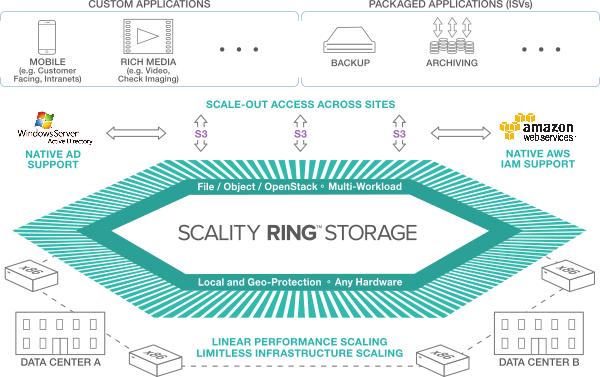
<p>The RING is fully software defined object storage optimised for cloud native architectures and applications. It runs on any commodity x86 hardware, is based upon standard Linux packages, and scales linearly for both performance and capacity. I asked the question “how big can it scale?” and I was told that there’s no limit.</p>

<p><img src="https://blog.edmorgan.info/assets/images/Scality_Architecture_RING.jpg" alt="The RING" /></p>

<p>Scality formed out of an email software company where they were asked to help Service Providers compete with the Gmail and Hotmails of this world. As CTO <a href="https://twitter.com/GiorgioRegni">Giorgio Regni</a> said, “<em>Buying a huge enterprise SAN to store pictures of cats does not make a lot of sense..</em>”. Scality was born out of the need for a more scalable, object based solution, and they signed up their first customer (a large SP, unsurprisingly) pretty much immediately after launching in 2009.</p>

<p>From a technology point of view Scality natively supports NFSv3, SMB2.0, and FUSE for file access to their scale out file system, OpenStack APIs, the ubiquitous and obligatory S3 and CDMI object APIs, and features both local and geo-distributed data protection via replication and erasure coding.</p>

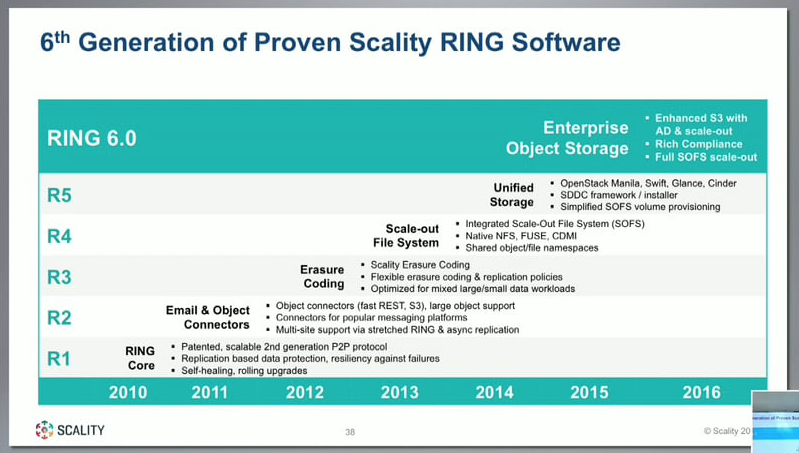
<p>Recently v.6 of the RING software was <a href="https://www.scality.com/ring/scality-ring-6/">released</a>:</p>

<p><img src="https://blog.edmorgan.info/assets/images/ring-6.png" alt="Ring 6.0" /></p>

<p>This release predominently focussed on features requested by the Enterprise, including -</p>

<ol>
  <li>Full AD and AWS IAM integration</li>
  <li>WORM and encryption features (with reference cases of migration from EMC Centera and NetApp Snaplock).</li>
  <li>Integrated load-balancing and connector failover for SOFS.</li>
  <li>Quotas &amp; reporting (can be extracted via CLI/API in addition to the GUI).</li>
  <li>Versioning/Undelete functionality.</li>
  <li>New statistics repositiory for reporting (Eleastic Search based, real-time data collection, API driven) - integrations into Graphana, Elastic Search for statistics, and Swagger for API documentation.</li>
</ol>

<p>In addition, one of the more interesting releases was the <a href="https://www.scality.com/scality-s3-server/">Scality S3 Server</a>. This is a free tool that runs in a Docker container which allows developers to test their applications against S3 based object storage on their own workstations without impacting the production RING.</p>

<p>Brilliantly the development of this tool came out of a Hackathon that Scality ran from their Paris office, and 8 people were employed off the back of that. That’s a nice way to recruit people and grow the community around a product, if you ask me.</p>

<p>I think Scality have one of the more complete object storage solutions on the market right now, and the fact it’s completely decoupled from any hardware makes it incredibly versatile depending on your usecase. I’m very much looking forward to seeing more of them going forwards.</p>

<p>If you want to know more about object storage in general, <a href="https://twitter.com/esignoretti">Enrico Signoretti</a> has written several good <a href="https://www.juku.it/en/s3-rule-storage-tiers/">pieces</a>, and one of my Storage Field Day peers <a href="https://twitter.com/jdgreen">James Green</a> has written about Object Storage <a href="https://www.actualtech.io/greasing-the-skids-on-object-storage/">here</a>.</p>

<p>The full Scality presentations from Storage Field Day can also be found <a href="https://techfieldday.com/appearance/scality-presents-at-storage-field-day-11/">here.</a></p>

<p><em>Disclaimer: This blog is part of my series on Storage Field Day 11. I was personally invited to attend Storage Field Day 11 as an independent delegate, with GestaltIT covering my travel, accommodation, and the majority of my subsidence costs.  However I was not compensated for my time.  I am not required to blog on any content and blog posts are not edited or reviewed by the presenters or the respective companies prior to publication.</em></p>]]></content><author><name>edmorgan</name></author><category term="blog" /><category term="storage" /><category term="scality" /><category term="sfd11" /><summary type="html"><![CDATA[A look at object storage vendor Scality]]></summary><media:thumbnail xmlns:media="http://search.yahoo.com/mrss/" url="https://edmorgan.info/assets/images/markdown.jpg" /><media:content medium="image" url="https://edmorgan.info/assets/images/markdown.jpg" xmlns:media="http://search.yahoo.com/mrss/" /></entry><entry><title type="html">DCOS 101 - Installing DCOS on AWS</title><link href="https://edmorgan.info/DCOS101-InstallingOnAWS/" rel="alternate" type="text/html" title="DCOS 101 - Installing DCOS on AWS" /><published>2016-10-10T12:00:00+00:00</published><updated>2016-10-10T12:00:00+00:00</updated><id>https://edmorgan.info/DCOS101-InstallingOnAWS</id><content type="html" xml:base="https://edmorgan.info/DCOS101-InstallingOnAWS/"><![CDATA[<blockquote>
  <p>This post was previously hosted on a different site and then migrated here.</p>
</blockquote>

<p><img src="https://blog.edmorgan.info/assets/images/dcos-logo.jpg" alt="DCOS Logo" /></p>

<p>I’ve been a big fan of what <a href="https://mesosphere.com">Mesosphere</a> are doing with DCOS since they announced the product last year. For those of you that don’t know, DCOS is frickin’ awesome, it productises Apache Mesos into the ‘DataCenter Operating System’, and really makes life easy for you if you want to run a cloud native datacenter. So easy that Microsoft are running the Azure Container Service on DCOS, and if that’s not a good reference customer I don’t know what is..</p>

<p>So this is how Mesosphere describe the DCOS:</p>

<blockquote>
  <p>DCOS is a distributed operating system based on the Apache Mesos distributed systems kernel. It enables the management of multiple machines as if they were a single computer. It automates resource management, schedules process placement, facilitates inter-process communication, and simplifies the installation and management of distributed services. Its included web interface and available command-line interface (CLI) facilitate remote management and monitoring of the cluster and its services.</p>
</blockquote>

<p>One of the neat things about DCOS is how you can install packages and services at the click of the button, as if you were purchasing something from the iOS App Store, and everybody loves that whole app store analogy as a metric for digitisation and the consumerisation of IT, right?</p>

<p>I’ll touch more on that in a later blog post, but for now I just want to go through how to install DCOS on AWS (you can install it pretty much anywhere).</p>

<p>Installation is a piece of cake, as Mesosphere have created a CloudFormation template to automate the deployment.</p>

<p>Sign into AWS, and launch the DCOS template required. You can choose either a single master, or 3 node HA master.</p>

<p><img src="https://blog.edmorgan.info/assets/images/template-image.png" alt="Templates" /></p>

<p>From there you’ll go to CloudFormation, and click next.</p>

<p><img src="https://blog.edmorgan.info/assets/images/template-image2.png" alt="Templates" /></p>

<p>You’ll then get to input some variables for your DCOS cluster, ensure that you populate the following values:</p>

<ol>
  <li>Stack Name (this is the name of your cluster</li>
  <li>Key Pair (select an existing SSH keypair from AWS)</li>
  <li>OAuth Enabled (you need this to leverage an existing OAuth provider for initial admin login)</li>
</ol>

<p>You can leave the number of master and slaves as the default, as these are defined in the template you have selected.</p>

<p><img src="https://blog.edmorgan.info/assets/images/variables-image.png" alt="Templates" /></p>

<p>On the options page you can accept the defaults and click through to the review page. Accept the acknowledgement box, and click create.</p>

<p>Once you click create you will start to see the cluster spin up - this will take around 15 minutes, so go and grab a cup of tea or a cookie or something.. When it’s done, you’ll be able to browse to the AWS URL of your DCOS cluster and perform the initial login.</p>

<p><img src="https://blog.edmorgan.info/assets/images/login-image.png" alt="Templates" /></p>

<p>The intial admin login is created via OAuth, and several providers are enabled by default. I chose GitHub, but you know, choose whatever works for you..</p>

<p>Once logged in you’ll see a nice pretty dashboard that looks a bit like this…</p>

<p><img src="https://blog.edmorgan.info/assets/images/dash-image.png" alt="Templates" /></p>

<p>From there you need to download and configure the DCOS CLI - select the dropdown menu on the bottom left, and click ‘Install CLI’ - this will give you a couple of shell commands, select these and paste them into your console, and you’re ready to go.</p>

<p><img src="https://blog.edmorgan.info/assets/images/install-cli-image.png" alt="Templates" /></p>

<p>Hopefully this has shown that it’s dead easy to get DCOS up and running, in the next blog we’ll look at adding some users to the cluster, and how to deploy an application.</p>

<p>If you want to find out about the DCOS, or Mesosphere in general go to their website, and the source is all available on <a href="https://github.com/dcos">GitHub</a>.</p>]]></content><author><name>edmorgan</name></author><category term="blog" /><category term="dcos" /><category term="AWS" /><category term="cloud" /><summary type="html"><![CDATA[101 on installing DCOS in AWS]]></summary><media:thumbnail xmlns:media="http://search.yahoo.com/mrss/" url="https://edmorgan.info/assets/images/markdown.jpg" /><media:content medium="image" url="https://edmorgan.info/assets/images/markdown.jpg" xmlns:media="http://search.yahoo.com/mrss/" /></entry></feed>